Blog
Field notes: the year two crews measured the same tree two different heights
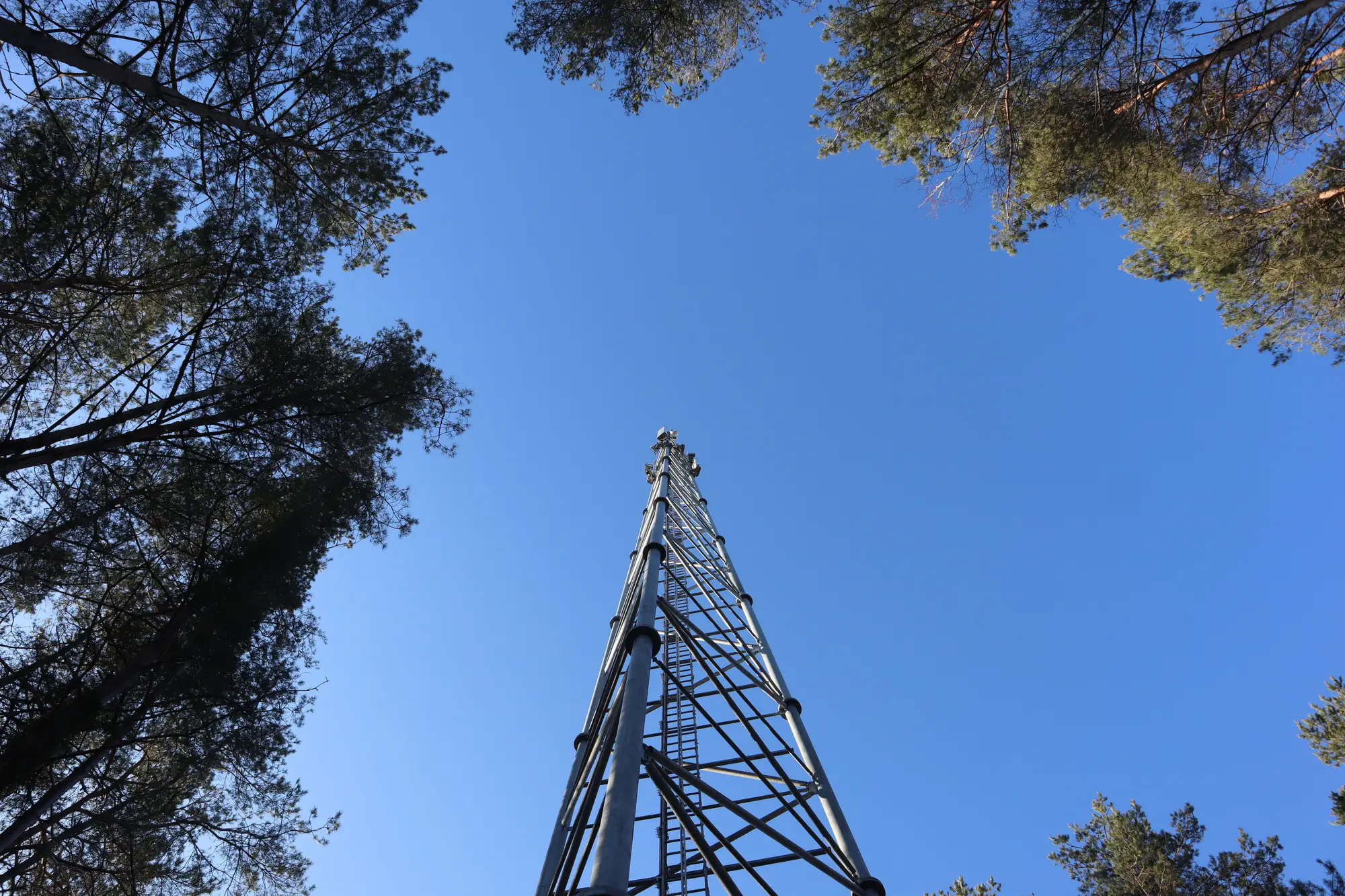
Two trim crews walked the same hop outside a client's switch site this spring, six weeks apart. The first logged a loblolly pine near tower 4 at 34 feet, clear of the Fresnel envelope by a comfortable margin. The second crew, sent back out after a line of thunderstorms knocked branches into a dish on the next hop over, called the same tree 41 feet.
Nobody topped it in between. Nobody swapped trees. The tree didn't grow seven feet in six weeks, not even a loblolly having a good year.
What changed was how each crew found the number.
The first crew paced off the baseline distance from a known stake to the trunk, sighted the crown through a clinometer, and ran the trig. Pacing a baseline through underbrush on a slope is its own small lie you tell yourself every ten steps, and a few feet off on distance compounds fast once you're running an angle through it. The second crew carried a laser rangefinder with an inclinometer built into the housing, shot straight to the highest visible point of the canopy, and took the number off the display. Different instruments, different sightlines, different ideas of "the top of the tree" on a crown that doesn't have a flat top to begin with.
Add in that loblollies lean toward open light, and on a hop that cuts along a tree line, "leaning toward the path" and "leaning away from it" are two different trig problems wearing the same bark.
None of this is a crew doing sloppy work. Ground measurement of tree height has always carried a few feet of slop built into the method, and every lineman who's ever carried a clinometer knows it. The problem only turns into a planning problem when that slop lands right on the line between "fine for another season" and "get a saw crew out before the first ice storm." A tree at 34 feet against a clearance envelope that starts at 38 is a non-event. The same tree at 41 is a work order. Six or seven feet of honest measurement error is exactly the band where real decisions sit.
The fix crews use when they bother is to agree on the method before they agree on the number: same instrument, same point on the crown, same baseline approach, logged on the report so the next crew knows what the first one actually did. That helps. It doesn't touch the bigger issue, which is that a ground crew gets one look at one tree on one day, and most hops have a hundred trees on them that nobody walked at all, because re-checking growth against clearance on every hop every year isn't a crew, it's a staffing line nobody's budget survives.
That's the gap a height model built off a consistent overhead pass is meant to close. No single pass beats a careful clinometer reading taken well on one tree. What it does is run a canopy-height check across every hop on the route the same way, every year, so this year's number and last year's came from the same method, not two different field notebooks. The annual survey behind Link Vegetation Monitor is built around exactly that comparison, canopy height run against a fixed Fresnel clearance envelope, hop by hop, so growth shows up before a crew gets sent out to argue about it.
The next time a height on a work order looks off by seven feet from what's in the file, it's worth asking which instrument wrote each number before assuming the tree did something strange. Usually it didn't. The method just changed hands.
If that kind of six-foot argument sounds familiar on your own line, it's probably worth seeing what one consistent pass a year tells you instead.